The Ultimate Guide to Custom T Shirt Silk Screen Printing
1. What Is Custom T Shirt Silk Screen Printing?
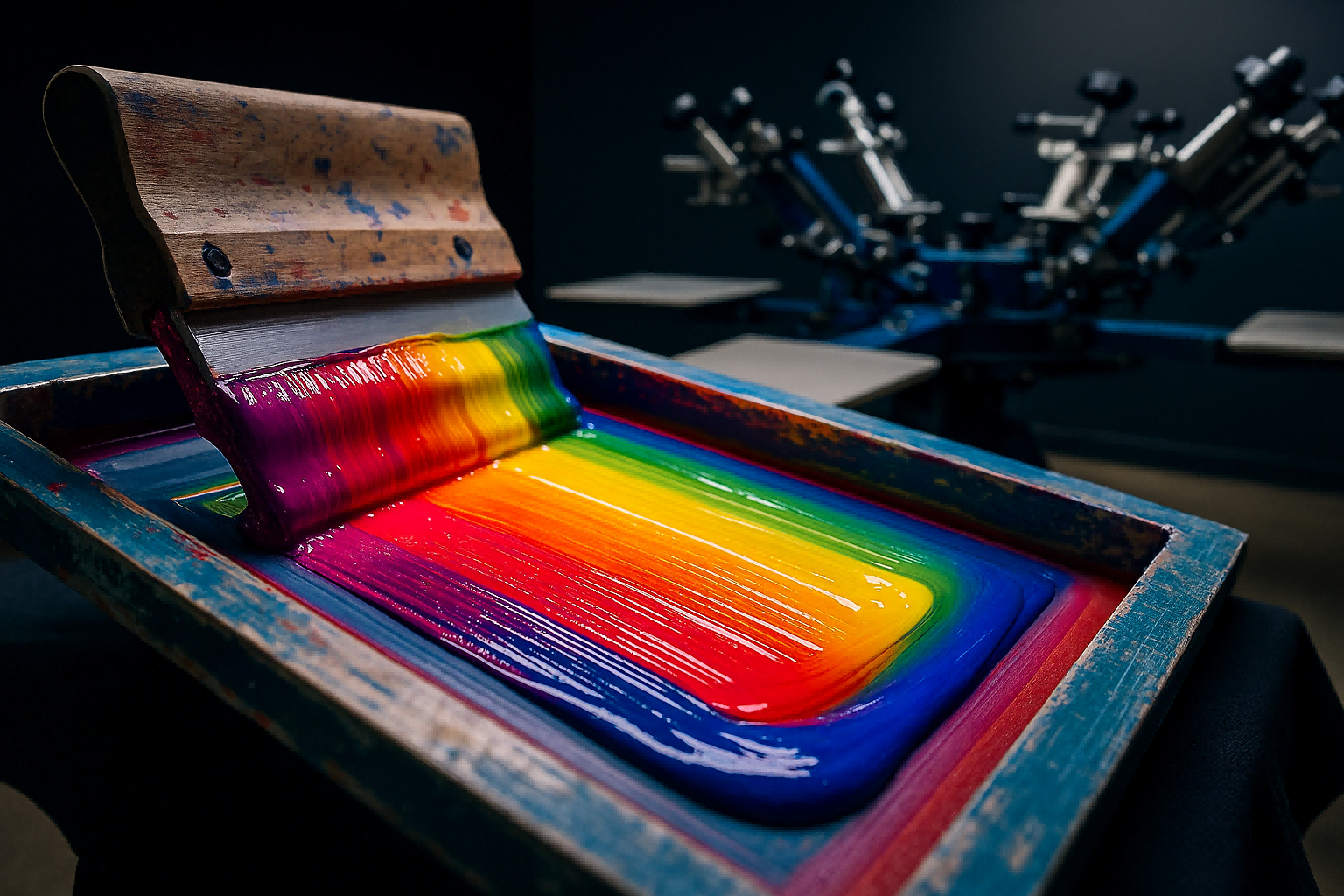
Silk screen printing is a print method where ink is pushed through a mesh screen onto fabric using a squeegee. Only the unblocked portions of the screen allow ink to pass, forming the design on the garment.
Core characteristics:
• Excellent durability (outlasts many wash cycles)
• Vivid, opaque colors even on dark fabrics
• Cost-effective at mid to high volumes
• Works on cotton, cotton-poly blends, and many performance fabrics
Compared to digital methods like DTG (Direct-to-Garment), silk screen printing avoids issues like cracking, fading, or weak opacity on thicker fabrics.
2. How Silk Screen Printing Works (Step-by-Step)
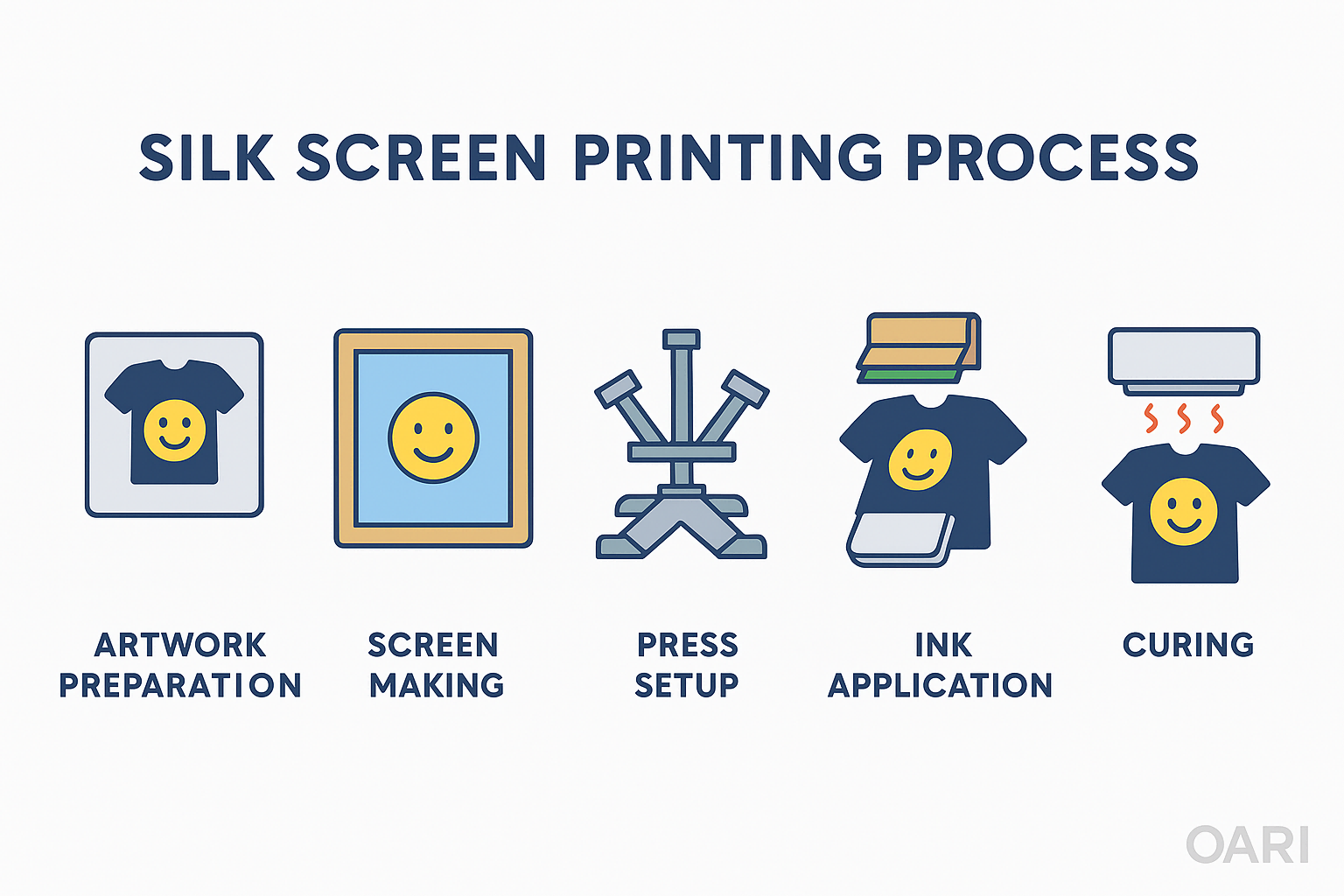
Step 1 — Prepare the Design
Preparing artwork correctly is the foundation of quality prints:
• Use vector files (AI, EPS, SVG) or high-resolution PNGs
• Set colors to spot colors (Pantone) for separate screens
• Simplify gradients if possible
Step 2 — Create the Screens
Each color in the design needs its own screen:
• A photosensitive emulsion is coated on the mesh
• Artwork blocks are placed on the screen
• Exposed to light to harden the emulsion where needed
• Washed to reveal the mesh pattern
Step 3 — Set Up Printing Press
Screens are aligned on a press over the garment:
• The garment is placed on the platen
• Screen lowered into position
Step 4 — Apply Ink
• Ink is flooded across the screen
• Squeegee pushes ink through mesh onto fabric
Step 5 — Cure the Print
• Printed garments go through a cure tunnel or heat press
• This ensures the ink bonds with the fibers for durability
Fast Fact: Screen prints generally outlast most garment life when cured correctly — a major reason they're preferred for brand apparel.
3. Choosing Fabric for Silk Screen Printing
Not all fabrics print equally well — the right cloth improves ink adhesion and visual pop.
Best fabrics for silk screen prints:
| Fabric Type | Pros | Common Use |
| 100% Cotton | Excellent ink absorption | Classic tees |
| Cotton/Poly Blends | Balanced comfort + print durability | Streetwear, merch |
Polyester | Good for sublimation hybrids | Sports apparel |
| Performance Knits | Moisture wicking + screen print compatibility | Activewear |
Pro Tip: Fleece and heavier cotton blends work especially well for bold screen prints on apparel like hoodies and sweatshirts.
At Artisan Casual, we source premium fabrics with controlled GSM (grammage) to ensure screen prints remain vibrant and long-lasting.
4. Artwork Preparation & Best Practices
Good preparation saves time and avoids costly revisions.
Artwork Tips:
• Work in CMYK or Pantone spot colors
• Avoid very thin lines (<1pt) for better ink hold
• Use high contrast for maximum impact
• Maintain proper bleed and margin
File Formats Accepted:
• Vector: AI, EPS, PDF (best)
• Raster: PNG with transparency, 300+ dpi
5. Cost Factors: What Determines Your Price?
Screen printing pricing varies based on:
🔹 Number of Colors
Each color requires its own screen plate — more screens result in higher costs.
🔹 Print Location
Chest logo vs full-front vs sleeve — more print areas = more ink & setup.
🔹 Quantity
Bulk orders significantly reduce the per-unit price, as the setup cost is spread across multiple units.
🔹 Garment Type
Hoodies and heavyweight tees cost more than basic T-shirts due to fabric weight.
🔹 Decoration Style
Simple screen prints are cheaper than complex multi-color or specialty inks.
Example Pricing Table (Indicative 2025):
| Quantity | 1-Color | 2-Color | Full Color |
| 25 | $15-$22 | $17-$26 | $20-$30 |
50 | $12-$18 | $14-$22 | $17-$26 |
| 100 | $9-$14 | $11-$18 | $14-$22 |
| 200+ | $7-$12 | $9-$15 | $12-$20 |
6. Screen Printing vs Other Methods
| Feature | Silk Screen | DTG | Heat Transfer |
| Durability | ⭐⭐⭐⭐ | ⭐⭐⭐ | ⭐⭐ |
| Color Brightness | ⭐⭐⭐⭐ | ⭐⭐⭐ | ⭐ |
Best for Bulk | ⭐⭐⭐⭐ | ⭐ | ⭐⭐ |
| Fine Detail | ⭐⭐ | ⭐⭐⭐⭐ | ⭐⭐⭐ |
Silk screen excels at bold colors and large runs. DTG can be better for photographic prints at small quantities.
7. Quality Control & Printing Standards
At Artisan Casual, every screen printed batch goes through:
• Pre-press color approval
• Test prints for registration
• Ink thickness checks
• Post-cure wash tests
This ensures long-lasting, vibrant prints that don't crack or peel.
8. Best Uses of Custom Screen Printed T Shirts
• Brand merchandise
• Team uniforms
• Event giveaways
• Retail clothing lines
• Fundraisers
• Streetwear collections
Screen printing's durability makes it ideal for garments intended to be worn often and washed frequently.
❤️ Why Brands Choose Artisan Casual
Artisan Casual combines:
✔ Premium material sourcing
✔ Professional screen print setup
✔ Flexible MOQs for startups
✔ Full OEM & ODM services
✔ Global shipping & fulfillment
Whether you need custom t shirt silk screen printing for a first drop or regular bulk production, we handle it end-to-end.
FAQ — Silk Screen Printing Custom T Shirts
❓ What is the minimum order quantity (MOQ) for silk screen printing?
MOQ varies by supplier and garment type, but Artisan Casual offers flexible MOQs starting as low as 50 pieces for most screen-printed T-shirts.
❓ How many colors can be screen printed?
Technically unlimited, but each color needs a separate screen. Most projects use 1–6 colors to balance quality and cost.
❓ How long does screen printing take?
Sample turnaround: ~5–10 days.
Bulk production: ~10–30 days, depending on quantity and complexity.
❓ Is silk screen printing better than DTG for custom T-shirts?
Yes, for large runs and bold graphics, silk screen offers more durability and lower per-unit cost when quantities increase.
❓ Can you screen print on dark fabrics?
Absolutely — with opaque inks and proper underbase, prints can be vibrant on black and dark colors.